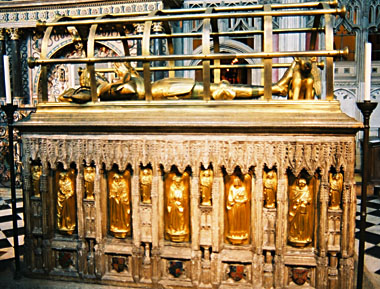
The tomb of Richard Beauchamp,
Earl of Warwick (d.1439) in St. Mary's church, Warwick
Photo © S. Alsford
The opulent tomb of Richard Beauchamp, centrepiece of the magnificent Beauchamp chapel built (1442-62) to house his corpse and serve for his chantry, was beyond anything to which even the wealthiest townsmen might aspire, as a monument. The gilded figures around the sides represented family members in mourning clothes.
The chapel houses other impressive tombs of later earls of Warwick. That of Thomas Beauchamp (d.1369) and his wife Katherine Mortimer has a central position in the chancel. It too is surrounded by carved figures, perhaps again representing mourners from various ranks of society. A few are shown below.
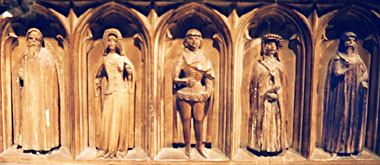
Detail from the tomb of Thomas Beauchamp
Photo © S. Alsford
But perhaps the tombs of nobility did inspire a few townsmen towards
emulation. The wealthy and connected John Baret of Bury St. Edmund's
left an unusually long testament (1463) with detailed instructions about his
funeral and the tomb he had already had built in a chantry chapel of
his foundation in the parish church. Samuel Tymms [Wills and
Inventories from the Registers of the Commissary of Bury St. Edmund's,
Camden Society, vol.49, 1850, 234] described the tomb thus:
"It is an altar or high tomb, with a cornice of Purbeck marble, surmounted by
a recumbent figure in stone of a corpse in a winding sheet, which is laid
open to exhibit the havoc which death has made upon the body.... The north
front of this tomb is divided into seven square panels.... within a
quatrefoil in the fourth or centre panel is the figure of a man in the
costume of the period,—long furred gown, hood, etc. and decorated with
the collar of SS."
The sculpture of the corpse atop the tomb represented Baret. The cadaver style distinguishes it from the representations on the Beauchamp tombs – it reveals a different philosophy; in this connection we may note that Baret possessed a book entitled "Learn How to Die", and that the Bury monk-poet, John Lydgate, of whom Baret may have been a patron, wrote about the Dance of Death.
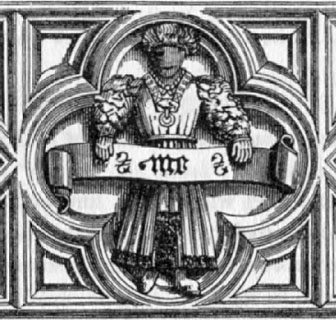
The smaller figure described by Tymms and shown above is also intended to depict Baret: it wears his Ss collar, which was given for service to the House of Lancaster, and it holds a scroll continued in the quatrefoils on either side, the whole bearing Baret's personal motto "Grace me govern" (the figure himself holding the word "me"). The smaller figure, of Baret in the prime of life, provides a contrast with his decaying corpse.
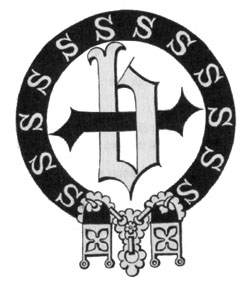
The wooden roof of the chantry chapel was divided into six panels, in each of which appeared the decoration shown below, incorporating the collar of Ss enclosing the monogram "jb". The attention paid to his memorials within the church – of which the tomb was only one – to his funeral and memorial arrangements, and to charitable and pious works are indicative of the degree of planning for and investment in the afterlife which men of Baret's time were prepared to undertake.